

A short, well-timed checklist reduces the risk of missing critical controls during a busy kitchen shift.
- Why Standardize the Checklist?
- Checks Before Preparation
- Controls During Cooking and Portioning
- End-of-Shift Review and Corrective Action
Why Standardize the Checklist?
A checklist is useful only when it reflects real operating risks and is completed at the correct time. Long forms filled in after the shift may create records without improving control.
Each item should state what must be checked, the acceptable condition and the action required when a result is not acceptable. Responsibility should also be assigned clearly.
Checks Before Preparation
Receiving checks should cover supplier information, packaging condition, temperature where applicable and signs of contamination. Stored materials need clear labels, appropriate separation and rotation.
Before production starts, teams should verify personal hygiene, cleaning status, equipment readiness and the separation of raw and ready-to-eat areas.
Controls During Cooking and Portioning
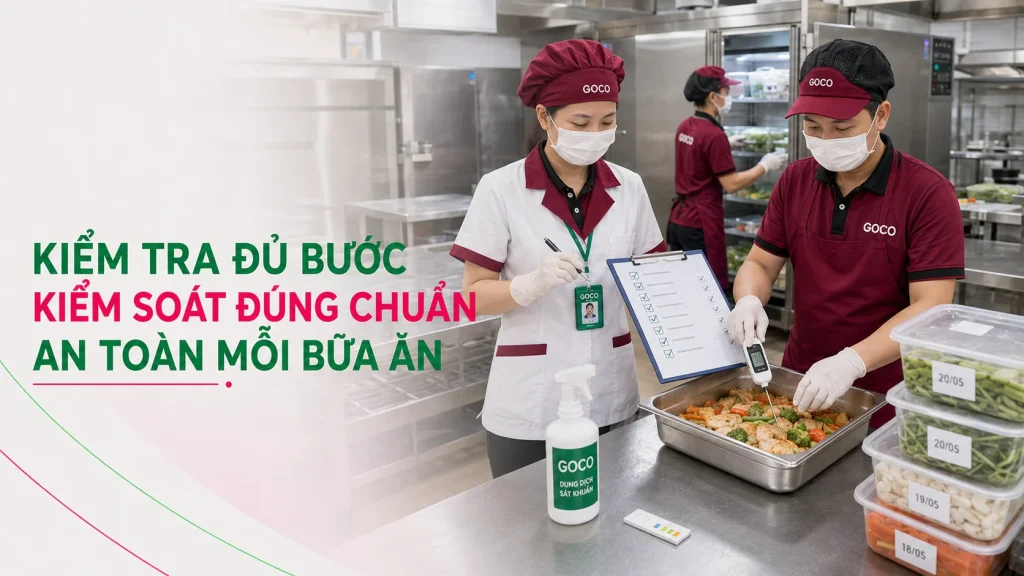
During preparation, supervisors should monitor raw-to-cooked separation, time and temperature, utensil control and employee practices. High-volume periods require closer observation because shortcuts are more likely.
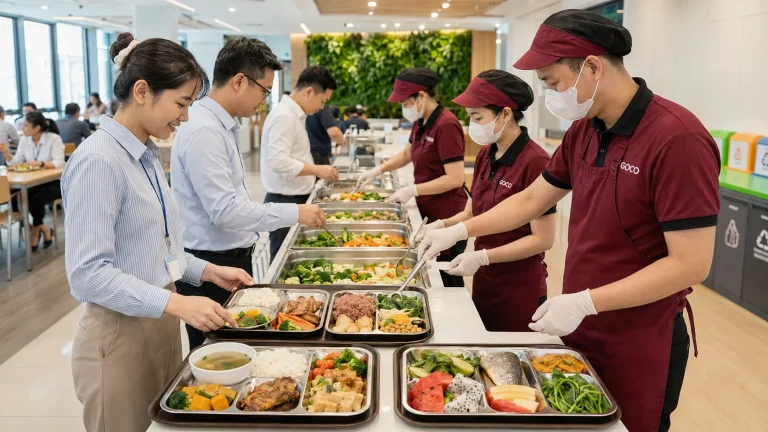
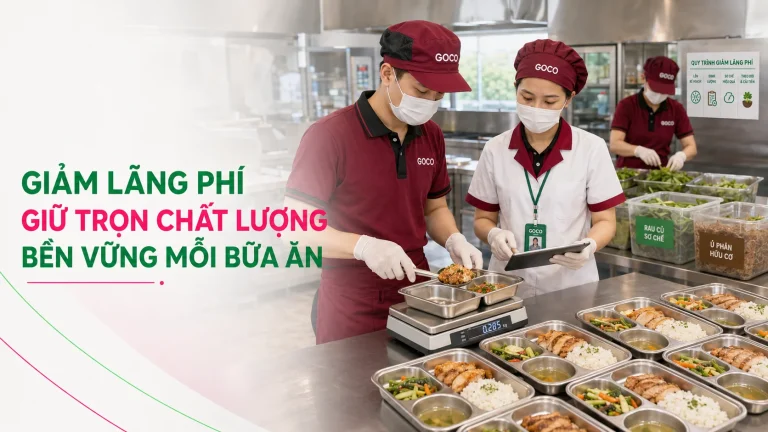
At portioning, food condition, portion standards, clean tools and holding time must be checked. Labels and meal counts should match the delivery or serving plan.
End-of-Shift Review and Corrective Action
The closing checklist should cover leftover handling, sample retention where required, waste records, cleaning and equipment shutdown. Any deviation should include a documented corrective action.
Repeated problems should be reviewed for root causes such as equipment, layout, workload, training or unclear instructions.
Key Takeaways
- Ingredient receiving and storage
- Personal hygiene, equipment and contact surfaces
- Separation of raw and cooked food
- Deviation records and corrective actions
Looking for a solution that fits your operation?
GOCO VINA supports clients from needs assessment and menu development to daily operations and quality control. Talk to our team to identify an approach that matches your scale, workforce and budget.
Request a catering consultation · Explore GOCO VINA services